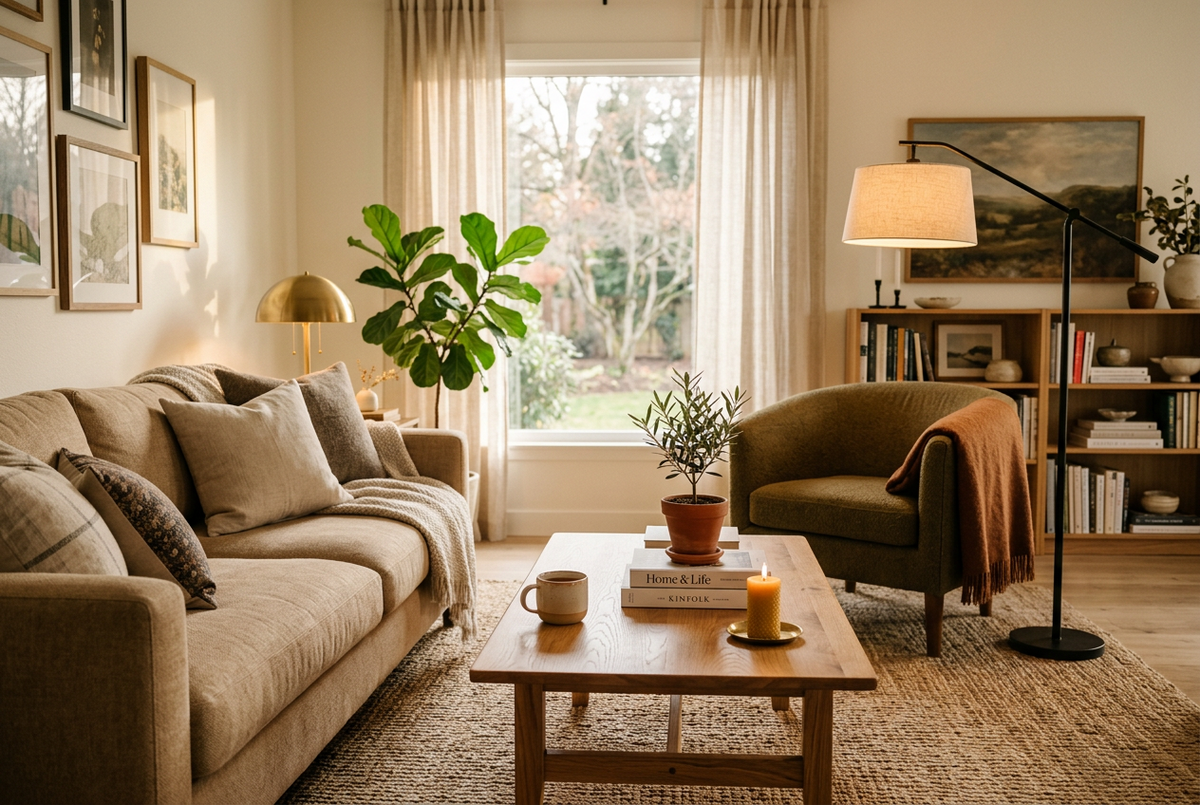
Great Design Doesn't Require a Large Home
A smaller home can offer something special: the opportunity to make every corner meaningful.
When space is limited, furniture choices become more important. Each piece needs to contribute to the comfort, function, or visual character of the room.
But small-space living doesn't mean sacrificing beautiful design.
With the right proportions, practical storage, and versatile furniture, even a compact apartment can feel welcoming, organized, and full of personality.
At FurniCurate Lounge, we believe smart living begins with thoughtful choices.
Here's how to make every square foot feel more intentional.
1. Choose Furniture That Fits the Room—Not Just Your Style
It's easy to fall in love with a sofa online.
But before purchasing, take a moment to consider how the piece will work in your actual space.
A sofa that looks perfectly proportioned in a large showroom may feel overwhelming in a compact apartment.
Measure Before You Shop
Start by measuring:
-
The room's width and length.
-
Doorways, hallways, and staircases along the delivery route.
-
Available wall space.
-
Window and door clearances.
-
The area required to open drawers or extend reclining furniture.
Use painter's tape to outline the furniture dimensions on your floor.
This simple exercise helps you understand how much space a new piece will occupy before it arrives.
Look for Visually Light Designs
Furniture with slim legs, open bases, and simple silhouettes can help maintain a sense of openness.
A compact sofa raised slightly off the floor may appear less bulky than a large, solid-base design.
Similarly, a narrow console table can provide useful surface space without dominating the room.
Shop the Look: Explore compact sofas, loveseats, and small-space accent furniture.
2. Make Multifunctional Furniture Your Everyday Advantage
One of the most useful strategies for smaller homes is selecting furniture that performs more than one function.
Consider pieces that support your daily routine while helping you conserve floor space.
Storage Ottomans
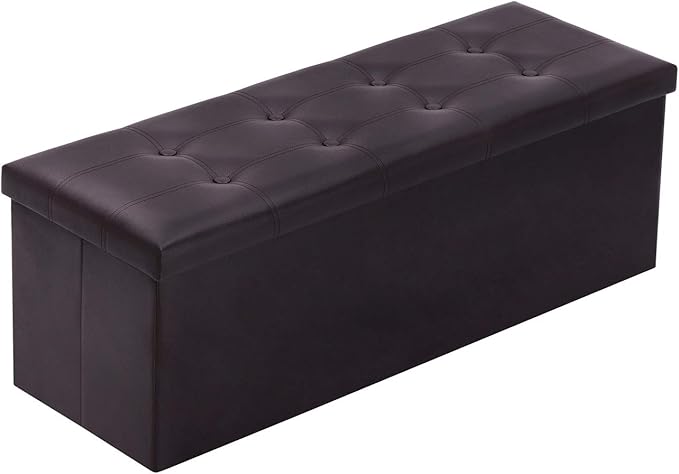
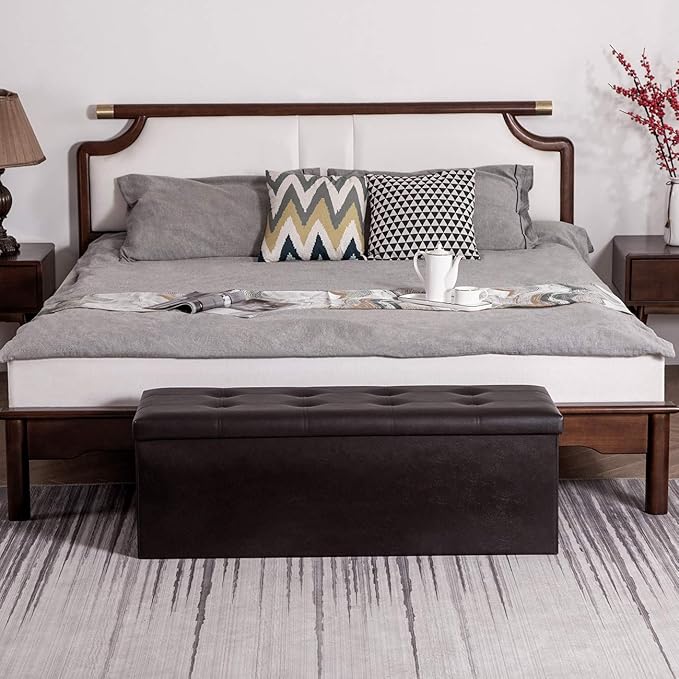
A storage ottoman can provide additional seating, a place to rest your feet, and concealed storage for blankets or everyday items.
Nesting Tables
Nesting tables offer flexible surface space.
Keep them together when you need a compact arrangement, then separate them when entertaining guests.
Storage Beds
Beds with built-in drawers or under-bed storage can help organize extra linens, clothing, and seasonal essentials.
Convertible Furniture
Depending on your needs, a sleeper sofa, folding desk, or extendable dining table may offer useful flexibility.
The best multifunctional furniture doesn't simply save space. It makes everyday life easier.
3. Think Vertically With Smart Storage
When floor space is limited, walls become valuable design opportunities.
Tall bookshelves, wall-mounted shelves, and vertical storage cabinets can help organize your belongings while leaving more room for movement.
Create Organized Zones
Instead of placing storage randomly throughout the room, assign each area a purpose.
For example:
-
A narrow entryway cabinet for everyday essentials.
-
A bookshelf for books and decorative objects.
-
A closed storage unit for items you prefer to keep out of sight.
-
A wall shelf above a desk for office supplies.
Combining open and closed storage can help the room feel both practical and visually balanced.
Design Tip: Leave some shelf space empty. A little breathing room makes displayed objects easier to appreciate.
4. Use Color to Create a Calm, Open Atmosphere
Color can influence the perceived atmosphere of a room.
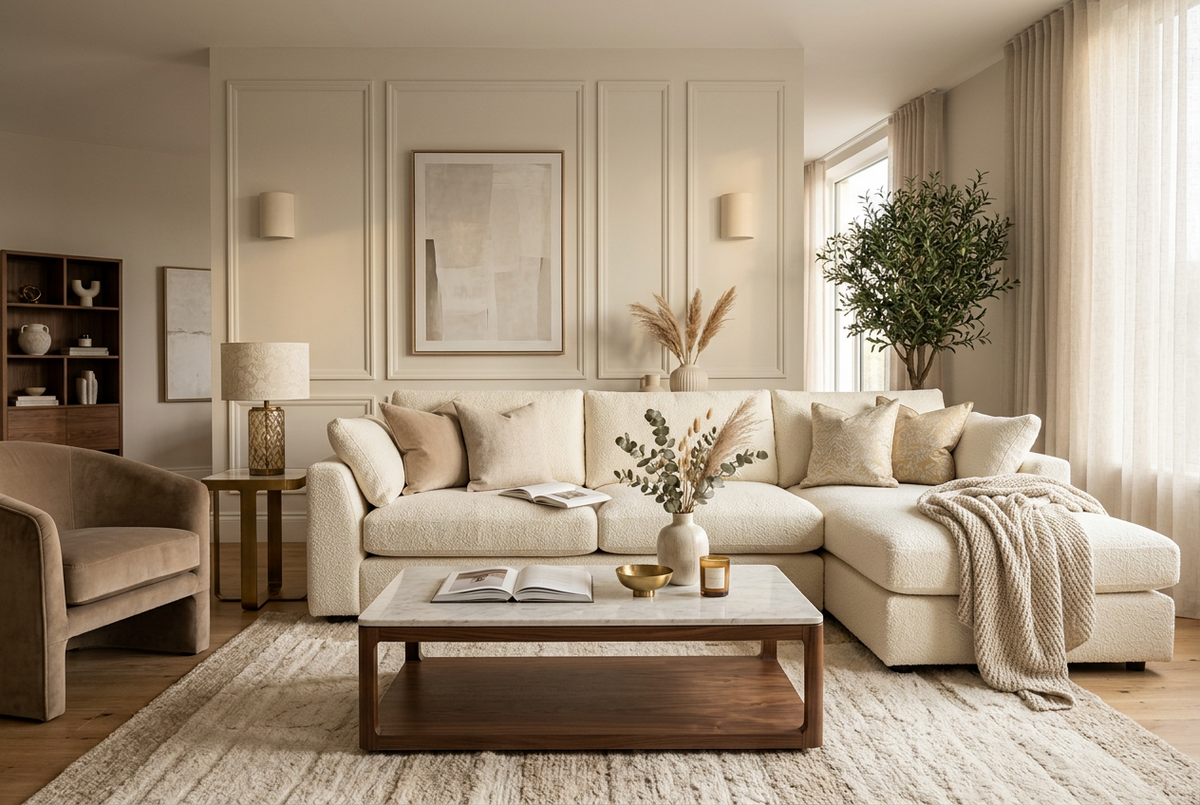
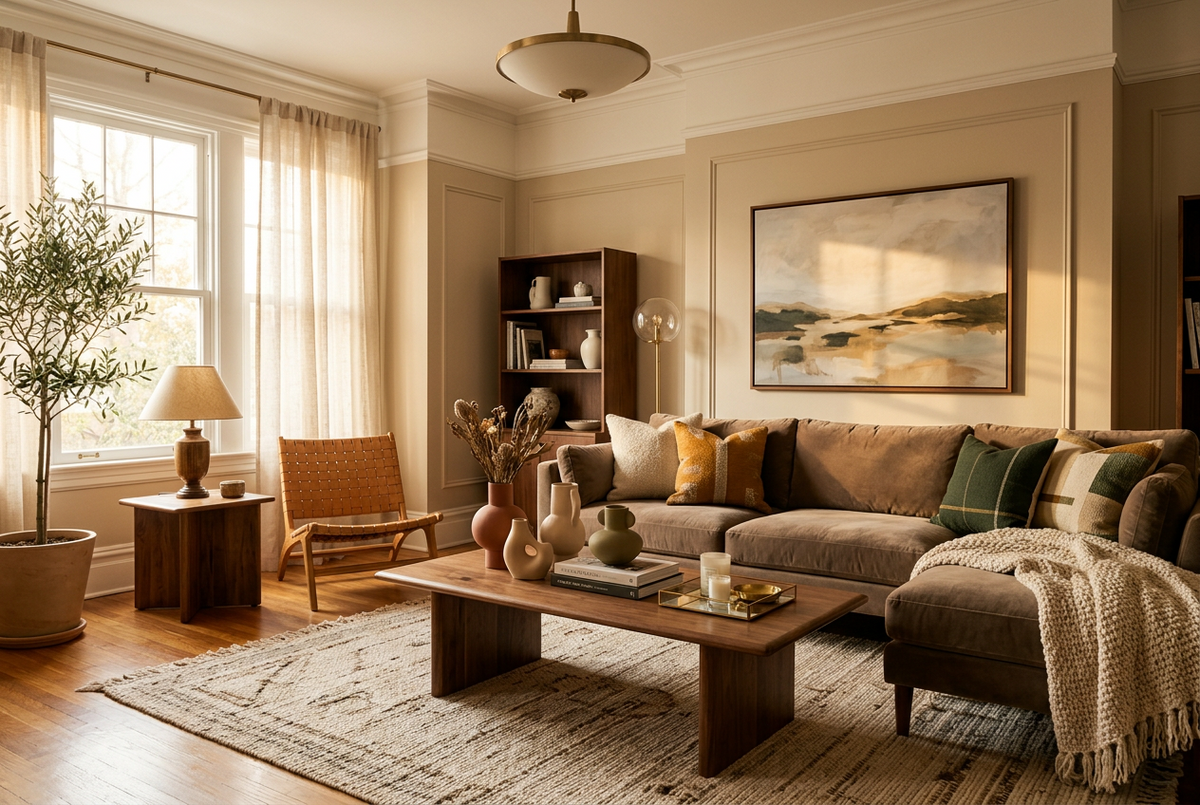
Warm whites, soft beige, light gray, and muted earth tones often work well as a foundation for compact interiors.
But a small home doesn't have to be entirely neutral.
Introduce personality through:
-
A rich walnut coffee table.
-
A muted green accent chair.
-
A textured area rug.
-
Warm brass or bronze details.
-
A favorite piece of artwork.
A consistent palette can make separate furniture pieces feel connected.
Rather than choosing every item in exactly the same shade, combine related tones and textures for a more layered appearance.
5. Create Distinct Living Zones Without Walls
In a studio apartment or open-plan home, furniture can help define separate areas.
A carefully positioned sofa can distinguish the living room from the dining space.
An area rug can visually anchor a seating arrangement.
A narrow console behind a sofa can provide a subtle boundary while adding storage or display space.
Try the Three-Zone Approach
Relaxation Zone: Sofa, accent chair, and coffee table.
Productivity Zone: Compact desk, supportive chair, and task lighting.
Dining Zone: Small dining table or extendable table with appropriately sized seating.
Each zone should feel connected to the overall room while serving a clear purpose.
6. Keep Furniture Flexible
Smaller spaces often need to accommodate changing activities.
A living room may become a workspace during the day and an entertainment area in the evening.
Furniture that is easy to reposition can help.
Consider lightweight accent tables, movable ottomans, and compact storage solutions.
If you frequently host guests, flexible seating can be especially valuable.
A comfortable accent chair or extra ottoman can provide seating when needed without requiring a permanently oversized sofa.
7. Avoid Common Small-Space Design Mistakes
Even a beautifully furnished apartment can feel crowded when the layout isn't carefully planned.
Mistake One: Buying Too Much Furniture
Every piece should contribute something meaningful.
Before adding another table or cabinet, ask whether it solves a real need.
Mistake Two: Ignoring Walkways
Keep clear routes between frequently used areas.
Furniture should support daily movement rather than interrupt it.
Mistake Three: Using Only Tiny Furniture
Small rooms don't necessarily require every item to be miniature.
One appropriately sized focal piece can feel more intentional than numerous small pieces scattered throughout the room.
Mistake Four: Overlooking Storage
Clutter becomes more noticeable when space is limited.
A few thoughtfully selected storage pieces can make a meaningful difference.
8. Design for the Life You Actually Live
Your apartment doesn't need to follow someone else's definition of perfect.
If you love reading, make room for a comfortable chair and good lighting.
If you enjoy entertaining, prioritize flexible seating.
If you work from home, invest in a practical desk setup.
The most successful small spaces are designed around real routines.
Small Space. Big Comfort.
A beautiful home isn't measured by square footage.
It's defined by how thoughtfully the space supports the people who live there.
With smart storage, multifunctional furniture, and intentional styling, even the smallest rooms can feel comfortable, polished, and welcoming.
Discover furniture that helps you make the most of every corner.
EXPLORE SMALL SPACE LIVING
SHOP STORAGE & ORGANIZATION
FurniCurate Lounge — Beautiful Furniture. Effortless Living.


 Acacia Harmony King Platform Bed Frame – Solid Rubber Wood, Caramel Finish, Mid-Century Modern Design, Unique Circular Wood Grain, 800lbs Capacity, No Box Spring Needed, Easy Assembly
 24x32 Inch Black Framed Bathroom Mirror,Matte Metal Frame Vanity Mirror,Round Corner,Farmhouse,Decorative Wall Mounted Rectangle Mirror
 48 * 30 Inches Electric Standing Widened Desk Adjustable Height with 4 Drawers, Double Storage Shelves Stand Up Desk, Home Office Workstation Sit Stand up Desk (Rustic Brown)